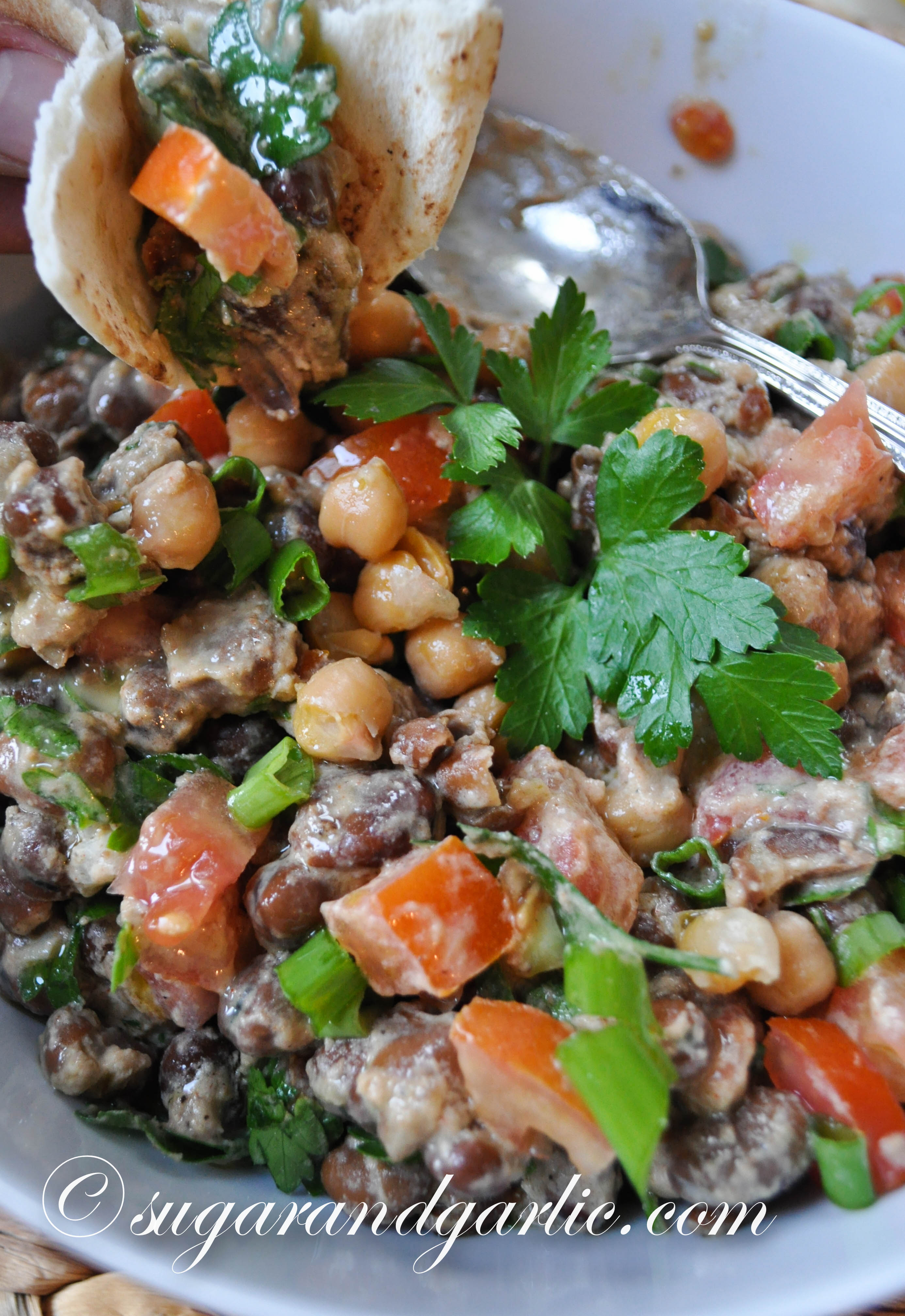
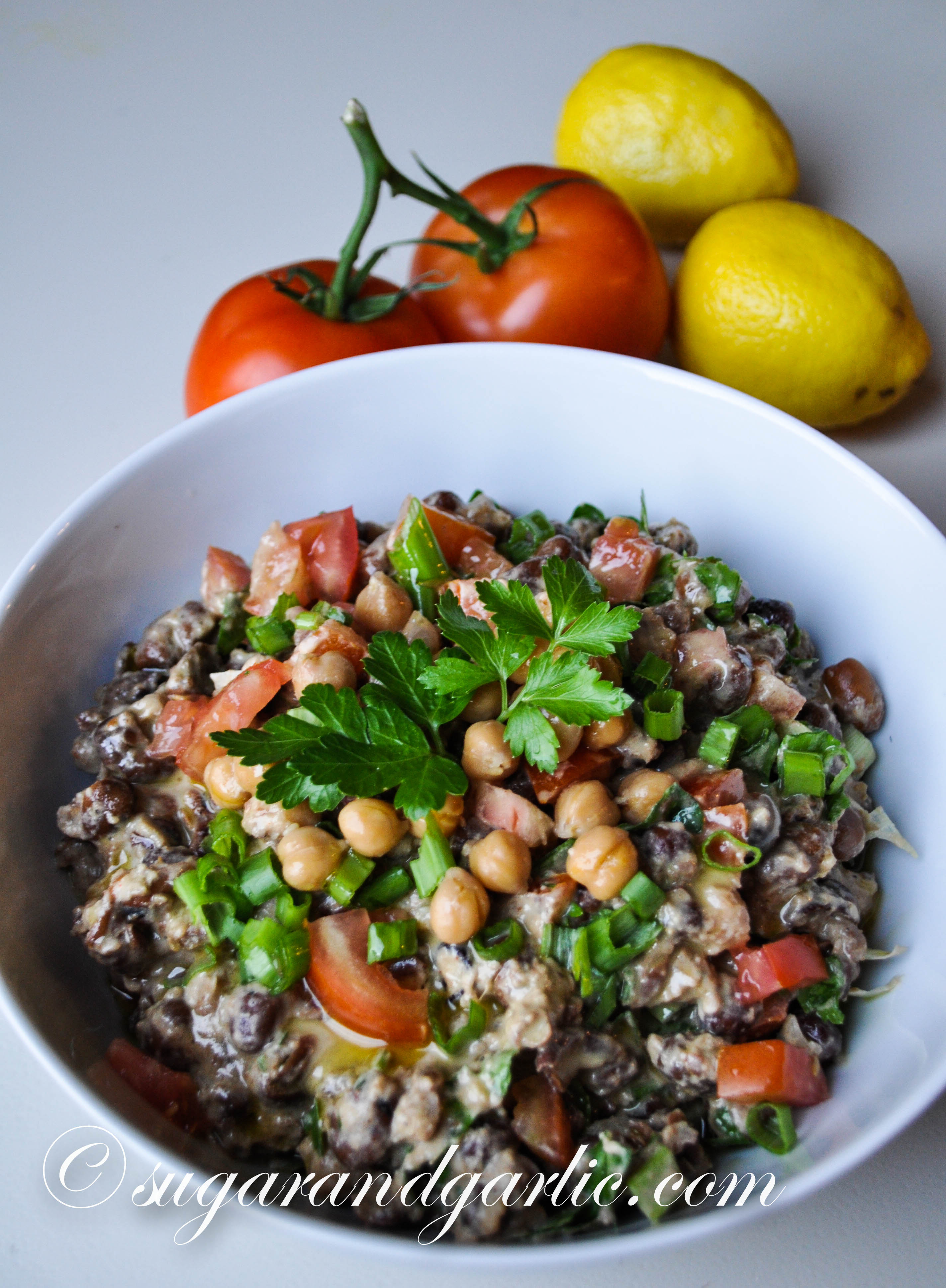
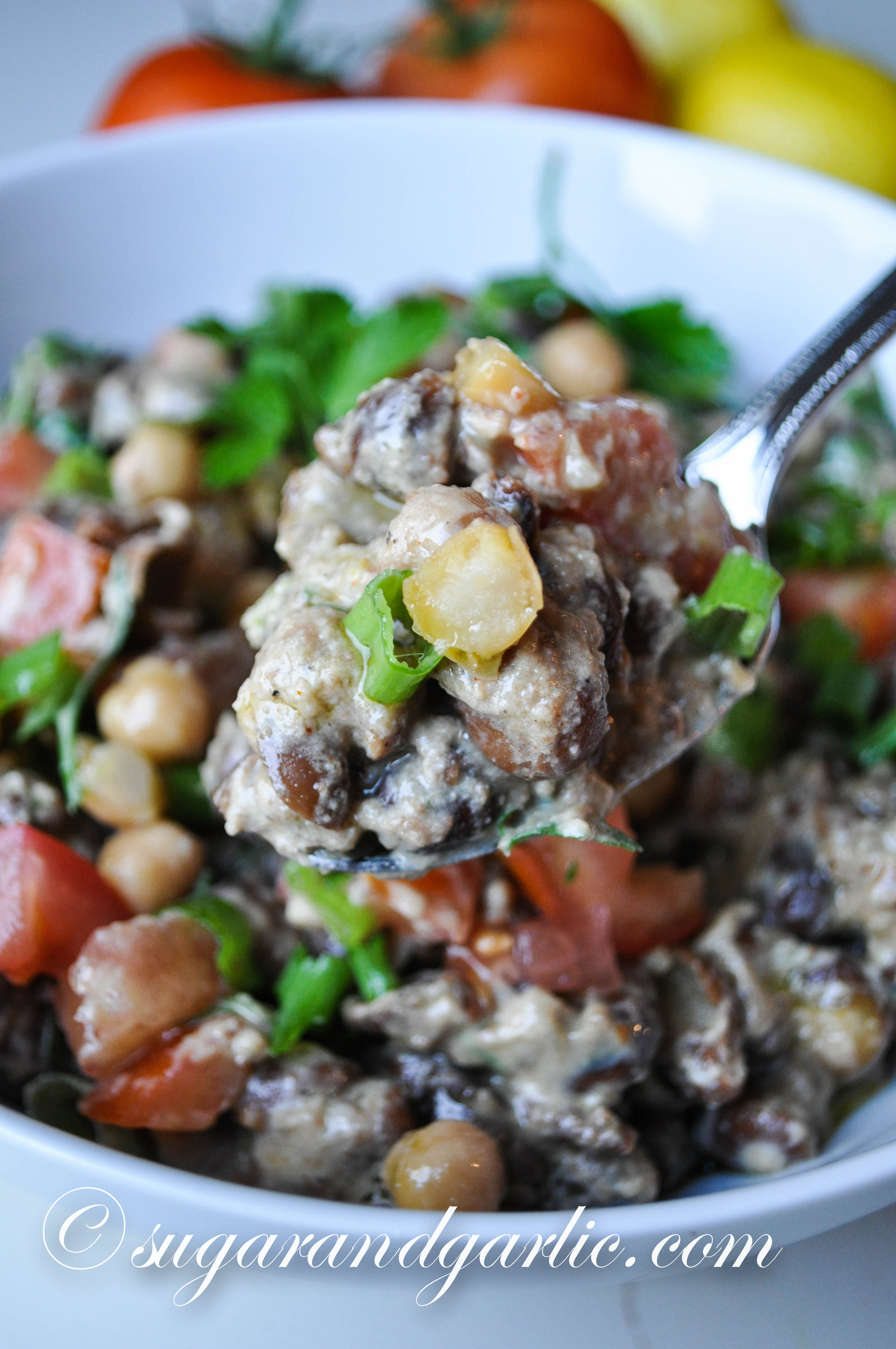
Ful mudammas (pronounced f-ool, rhyming with pool or tool, but why would I spell it like that, or foul?!) is a vegetarian dish that is a staple food item in Egypt. It is the national dish of Egypt. You cannot go to Egypt without trying ful at least several times. It is eaten for breakfast, lunch, or dinner, but most often as breakfast. Ful is the name of the broad bean used in Arabic and Mudammas in Arabic literally means “buried in the pot” as this dish is meant to simmer away for hours, allowing the vegetables and spices to build a deep medley of flavor. The flavorful stew of fava beans with spices, lemon, garlic, and olive oil thickens up into a delicious mixture that may be wrapped up into a pita sandwich, scooped up with little pieces of pita bread or chips, or even eaten straight out of the bowl with a spoon. This hearty dish consists of cooked fava beans and chickpeas, olive oil, lemon juice, tahini, garlic, spices, and a variety of fresh chopped toppings such as tomato, green onions, and parsley.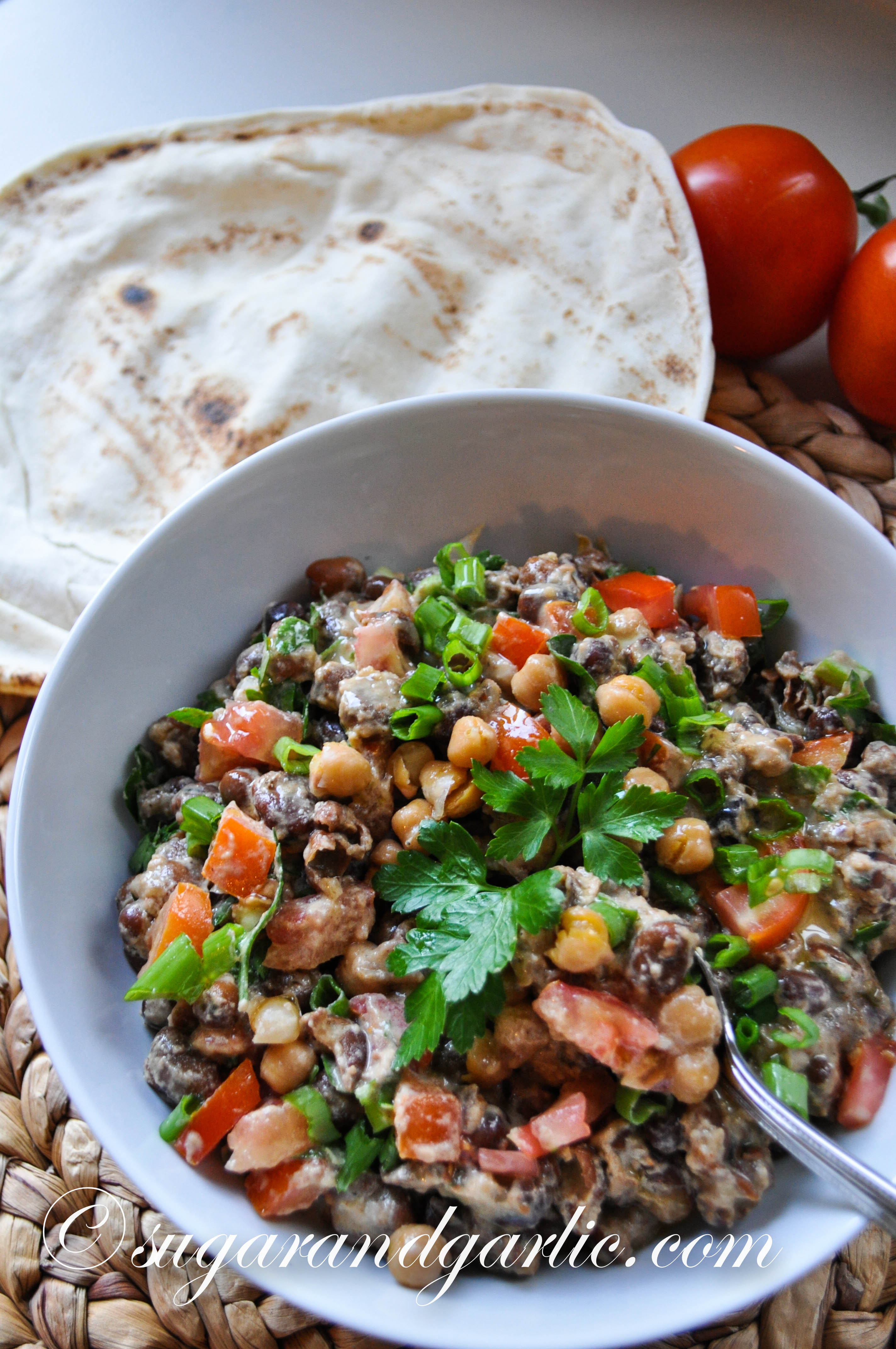 Unlike most recipes for ful you will find, this does not originate from a can. In fact, many people are a little intimidated as to how to get the dried hard little beans to that infamous “mudammas” phase quoted so perfectly on the can. If you set aside one nice afternoon to do this, you can prepare enough ful and freeze it for later to last you a couple of months! You also get to control exactly what spices, flavors, and herbs are going in, and it’s preservative free 🙂 Two cheers for clean eating!
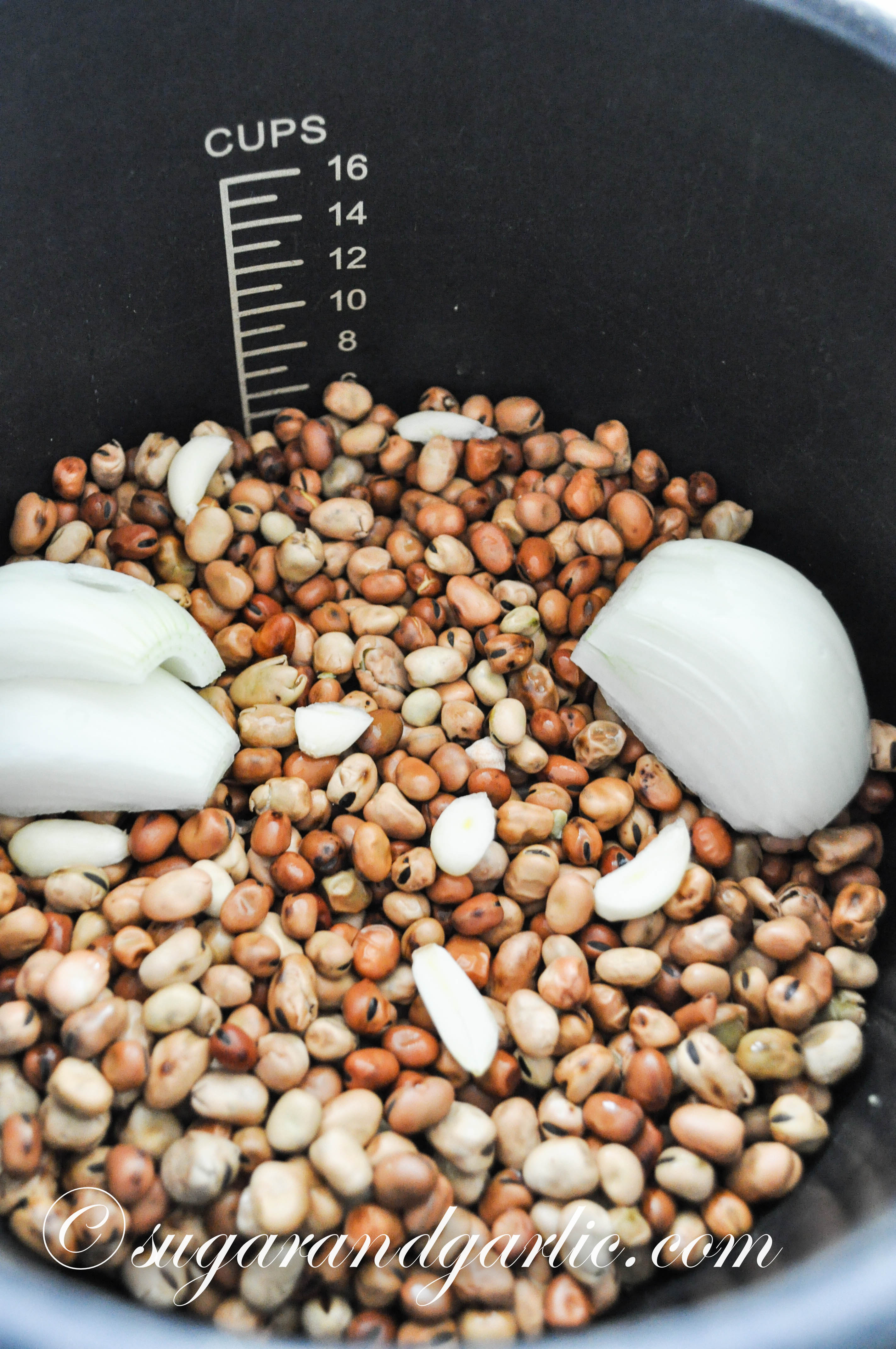
 You can find the dried brown fava beans at any Arabic market, and most international markets. Make sure it is the small, brown bean, with a black mark on top. Do not get peeled, green, or the large fava beans because those are used in different dishes. I actually find my fava beans from the bulk bins at Whole Foods; they are organic and from a local farm. I cook about a pound at a time, which makes about 4-5 family sized (serving 4) portions or 10 single portions. So I estimate at least the equivalent of about 10 cans of ful. You want to wash and sort the beans. Because I love adding chick peas to my ful, I usually pressure cook a cup of chickpeas first, before the fava, for about 60 minutes. I set these aside while the ful is cooking. The kids LOVE eating the cooked chickpeas, plain with nothing added! What a perfectly healthy and fun snack for the kids!
 Simply cook the fava beans in a pressure cooker with water, onions, and garlic (no salt, it inhibits the cooking) for 45-60 minutes. There is no need to soak the beans overnight when you use a pressure cooker. Once the beans have cooked soft, I uncover the pressure top and continue to simmer the stew for another hour or so, this time with the addition of spices, olive, oil, lemon, onions, more garlic, and salt. We are getting those beans mudammas, or buried in flavor!
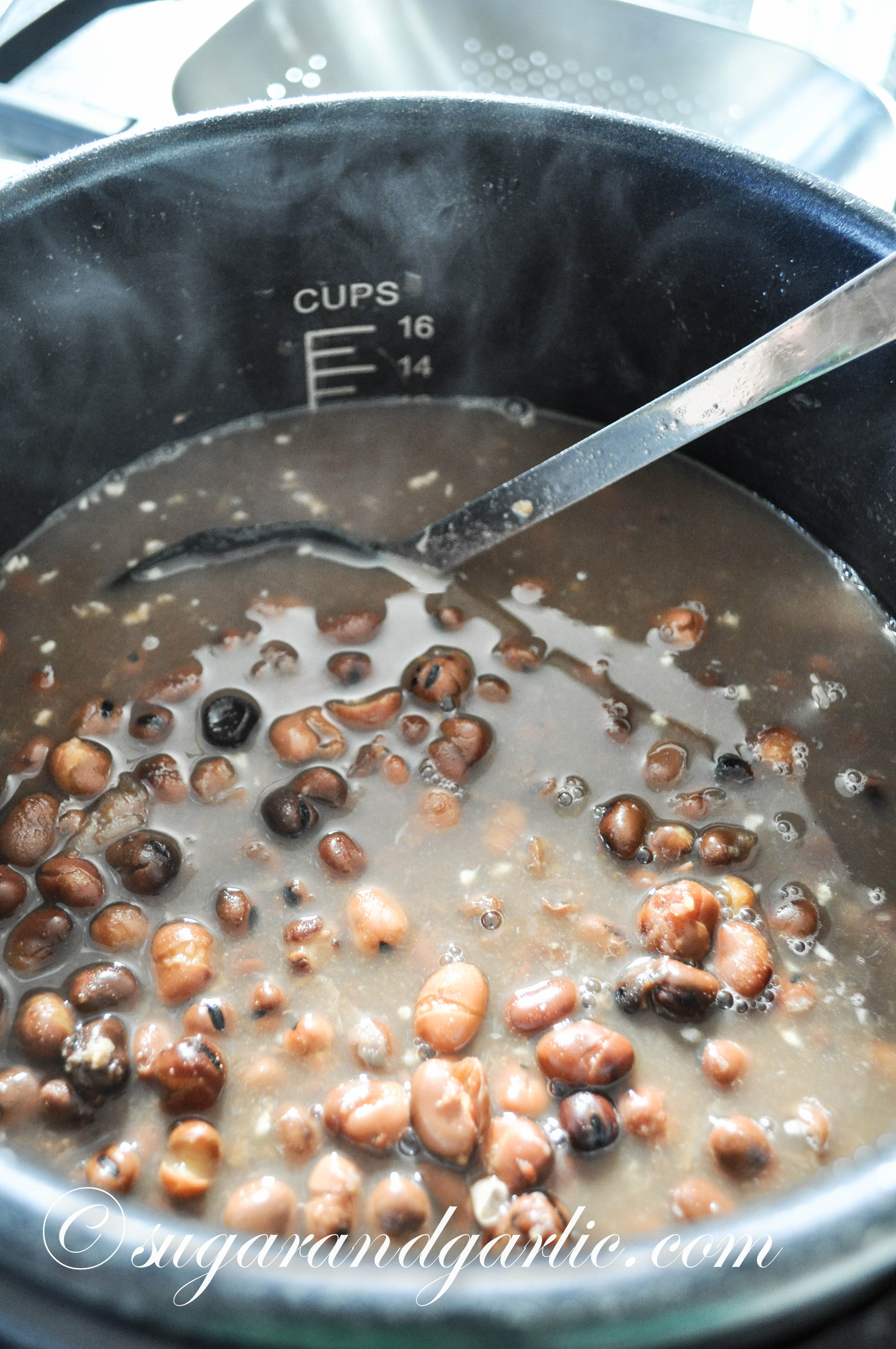
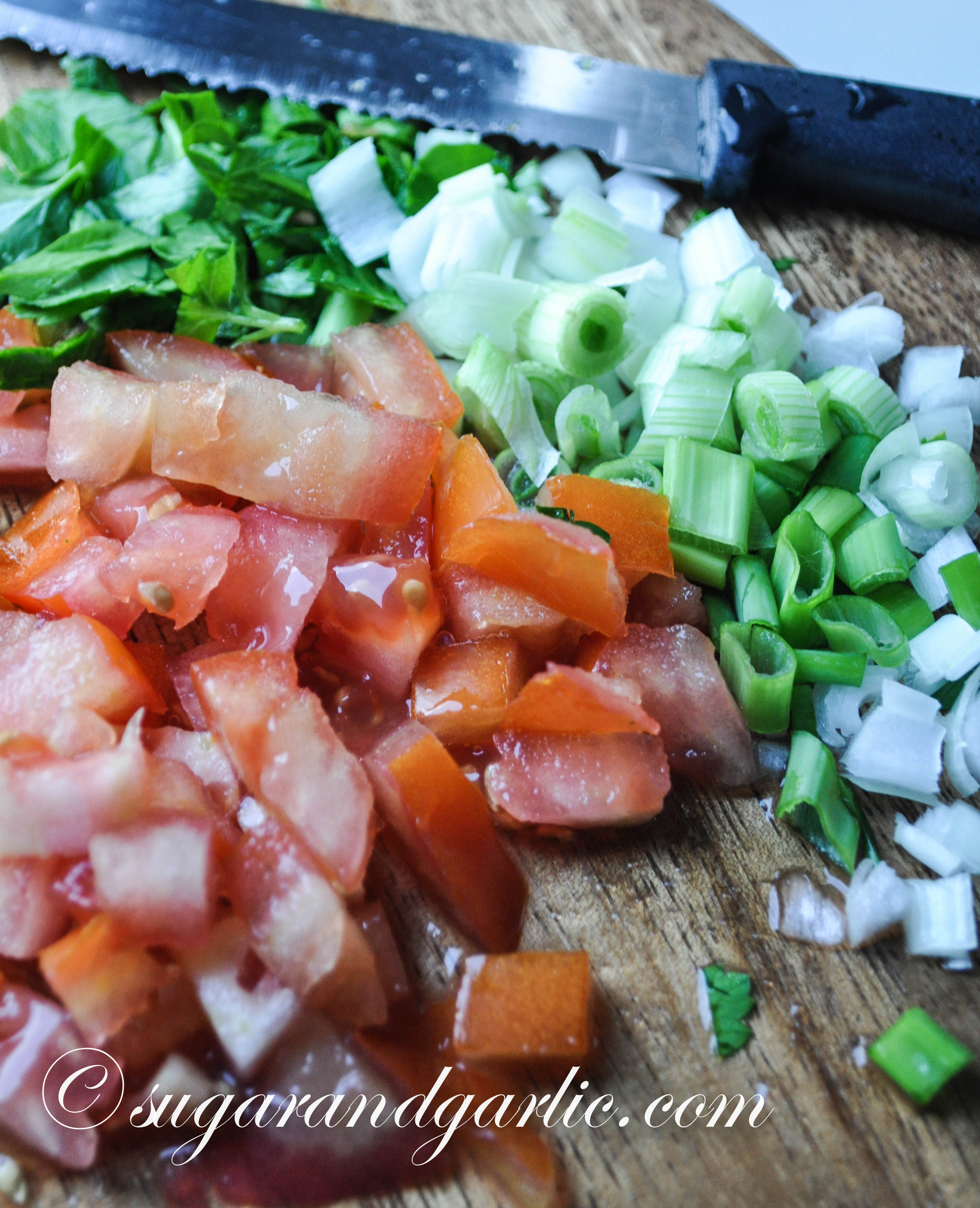
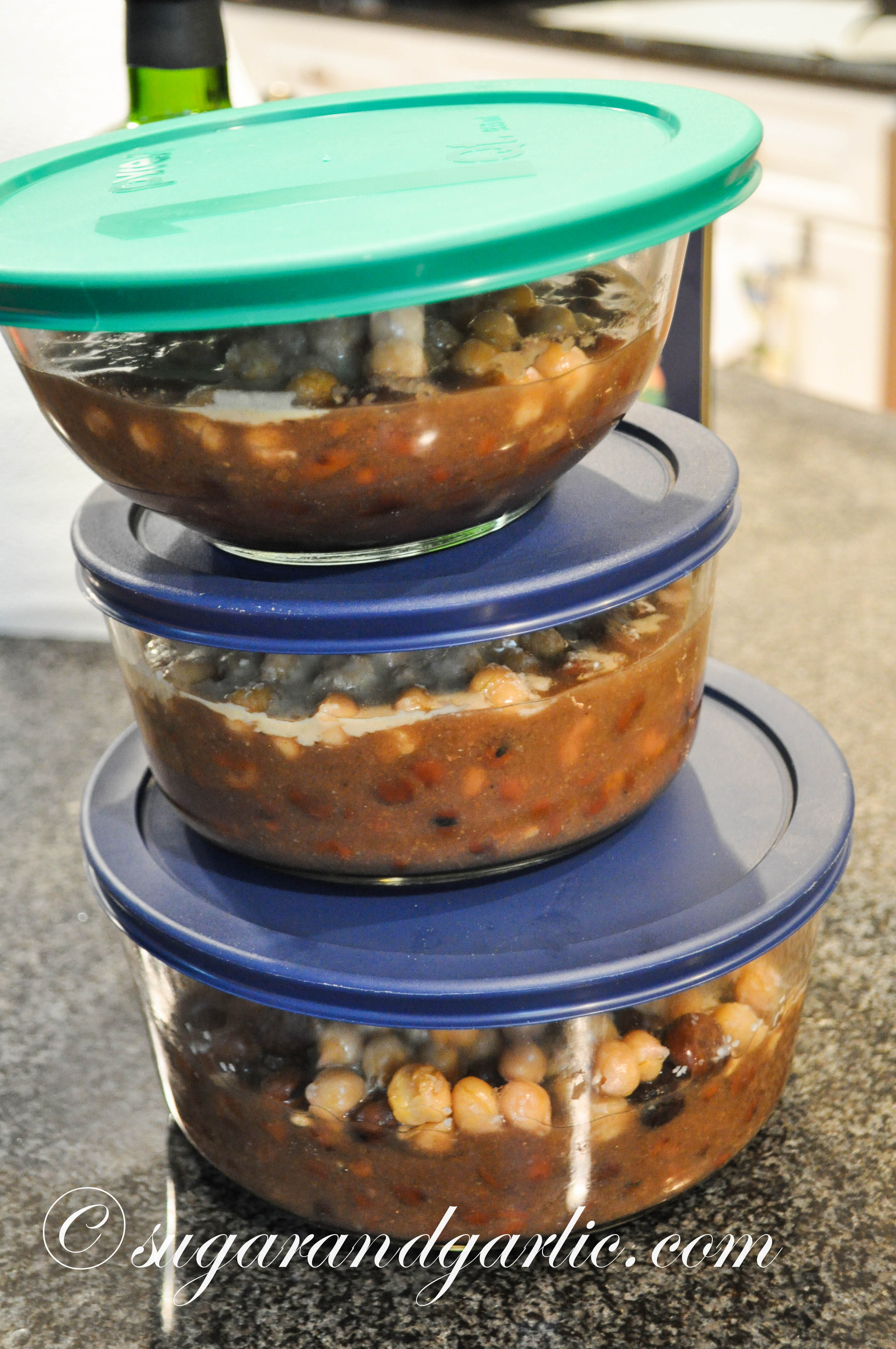
 Once the beans are nicely tender and deliciously infused with the garlic, onion, cumin, and lemon, you can prepare it for being served. First, I take the extra batches and portion them into glass storage containers to freeze for later. When I am ready to serve it, I give it a light mashing (some people completely puree it), add olive oil, fresh squeezed lemon juice, a drizzle of tahini, some cooked chick peas, chopped tomatoes, parsley, and scallions. The dish is served warm with pita bread. Ful mudammas in our family is often served for breakfast along side some small plates of hard boiled eggs, falafel, cheeses, olives, pastrami, pickled turnips, and refreshing slices of cucumber.
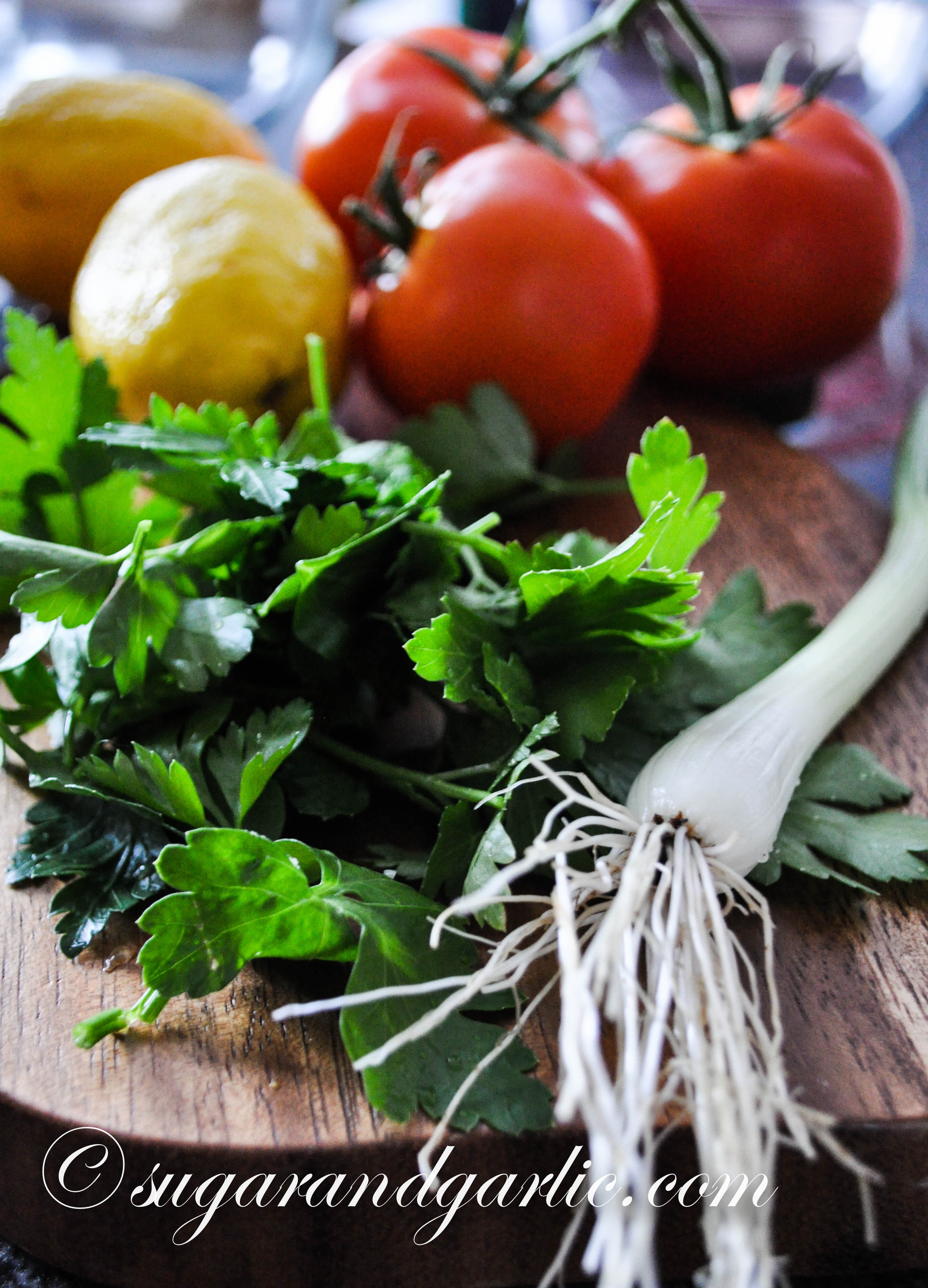

Fava beans are an excellent source of protein and fiber, and this healthy recipe is quite filling and has minimal fat. It is an excellent and favorite meal for suhoor, which is a meal Muslims eat in early dawn before the daytime fast begins. Once you taste a batch of freshly stewed homemade ful, you will never go back to cans! Once you go scratch, you’ll never go back 😉

- 1 lb of dried brown fava beans
- 10 cups of water
- 1 yellow onion, cut in half
- 4 cloves of garlic, sliced in half
- 1/2 c lemon juice
- 2 tsp salt
- 1 1/2 tsp cumin
- 2 tbsp minced garlic
- 1 yellow onion, diced
- 1/4 tsp black pepper
- 3 tbsp olive oil
- (optional) 1/4 cup cooked chickpeas, reserve some for garnish
- (optional) 1/4 cup tahini paste OR 1/2 cup tomato sauce
- 1/4 c fresh squeezed lemon juice (no lemon juice if cooking in tomato sauce)
- 1 tsp minced garlic
- 1 tomato, diced
- 1 green onion or scallion, diced
- 1/2 cup chopped flat leaf parsley, reserve some for garnish
- 2 tbsp extra virgin olive oil
- Wash and sort the fava beans.
- Place beans into a pressure cooker, add the onion and garlic, and cover with 10-12 cups of water. Cook on high pressure for at least 60 minutes. Do not add salt, as it inhibits cooking.
- Once the beans are cooked soft, you can remove the lid and add the spices and additional diced garlic and onions, lemon juice, and olive oil. Simmer for another 30-60 minutes, until the beans are very tender and flavorful.
- Portion the cooked beans into storage containers or ziplocs and freeze; be sure to store it with some of the cooking liquid. If you will add cooked chickpeas, you can place them in the container and freeze them with the fava beans. When you are ready to serve the beans you simply can pour them into a pot to reheat it and add the final toppings.
- Simmer 1 cup of stewed fava beans with the tahini OR tomato sauce, and 1/4 cup of cooked chick peas, over medium-high heat. If there is not enough liquid with the beans, add 1/4 c water to prevent drying out the beans. Remove from heat after 5 minutes, or after most liquid is absorbed.
- If you like you beans softened, as Egyptians do, this is the time to mash them gently with a fork or masher. Some people even puree it smooth, but we definitely like some texture and chunky beans. After mashing the beans, add the lemon juice (omit if you are cooking in tomato sauce), chopped tomato, onions, garlic, and parsley. Add 1 tbsp of the olive oil. Toss lightly.
- Garnish with the remaining chickpeas and parsley on top, and drizzle remaining olive oil. Serve with warm pita bread.
- If you will serve the fava beans simmered in tomato sauce, you will omit the lemon juice because the tomato sauce provides enough acidity. You can add a dash of lemon or vinegar if you prefer.
- The flavor with the tahini or the tomato sauce make for two very different dishes. Try them both!

This was phenomenal! I made it exactly as written, and served it with homemade pita bread. Thank you for a great recipe and super clear instructions.
Hi Hanna,
Thanks for your comments! I’m happy to hear the instructions were easy to follow and recipe was a hit in your kitchen! This is such a great dish. Enjoy!
Hi Hanna,
Thanks for your comments! I’m happy to hear the instructions were easy to follow and the recipe was a hit in your kitchen! This is such a great dish. Enjoy!
Hi recipe looks great. Do skin or peel the beans?
Hi Phil,
Thanks for your comments. No, you do not skin or peel the beans. If you have the correct fava bean that is in the photo, it will be perfect without any peeling!
Thanks for the pressure cooker tip. I’ve tried to cook cava beans from scratch at least a dozen times with not a single batch that was edible! I’m scared of pressure cookers but you’ve motivated me to dust mine off and give it a try. If I succeed I promise to give you all the credit!
Hi Karima,
I think you will love the results! Please let us know how it turns out. If you enjoy the results you may find t worthwhile to invest in an electric pressure cooker. They are care-free and hassle free! There will be no explosions in the kitchen!
If I have the bigger fava beans will I need to peal them?
Hi Sherryl,
The large fava beans are not used to make ful. They are a different texture and taste. You can get the smaller brown ones in Whole Foods or at any Arabic market. Good luck!
Hi Noha, I tried making the ful with the pressure cooker today. First I read the manual that came with it and it warned me not to try to cook any dried bean or other legumes without pre-existing. It said that the foam in the water could clog the pressure valve and cause it to explode. So I soaked the beans overnight as they instructed. I drained the soaking water, added more water (the amount in your recipe) and fired it up.
The manual said black beans take 35 min. I figured fava beans would take a little more, plus your instructions were 60 minutes, or more, without soaking, so I decided on 45 minutes. I must have had the heat too high because all of a sudden I smelled burned beans. Too late, cooked them too long, too high, cremated fava beans.
But I could see that above the charcoal the beans were soft! That’s enough hope for me to try again.
Moral of the story, read your manual, adjust as needed, keep the heat down, medium is better that medium high, and keep trying!
Hi Karima,
What kind of pressure cooker are you using? I promise that I, along with many others, have used both the instant pot or Cuisine Art electric pressure cookers to cook unsoaked, dry beans with no issues. Maybe you are using a different machine. Also, I definitely fill the pot with a lot of water! The beans absorb much of the water and need plenty. Did you use enough water? I’m guessing there was not enough if the beans were cremated! We appreciate your thoughtful feedback and I hope you have success the second time around. Bob apetit!
Noha
A splash of olive oil added to the cooking liquid will prevent foaming. I usually add 2 Tbs for a pound of beans.
Hello I want to make this but do not own a pressure cooker. Can you please post instructions on how to make this without one? It looks delicious. Thanks!
HI there,
I am so glad you are trying this recipe. It is delicious! If you do not have a pressure cooker, then you need to first soak the beans for a few hours (at least 4). Then rinse the beans and boil them in water until cooked tender. I cannot say exactly how long it takes since I have been using a pressure cooker for years, but definitely add more water as it dries so the beans do not scorch. Pressure cooking saves you hours when it comes to cooking beans! If you can, look into getting one. Please let us know how yours turn out in the pot:)
I love to make these beans for my Israeli friends. We also used to enjoy them as a Friday evening meal, mashed w/garlic, olive oil, potatoes & steamed chicory when I was a child. Thanks for the pressure cooking tip – I would not have thought to pc them!
Thank you for your feedback! This really is one of the most delicious and hearty meals you can make!
I love ful mudammas – used to eat it all the time when visiting Syria or Egypt. Thanks for the recipe!
Just one question: near the end you talk about “tomato sauce” – what are you referring to exactly? Where I live this means ketchup, and I don’t think ketchup would suit the dish. Is it something like the Italian passata?
Thank you, Talis. We love it too!